Elevating the “No Excuses” Debate

20120930-101431.jpg

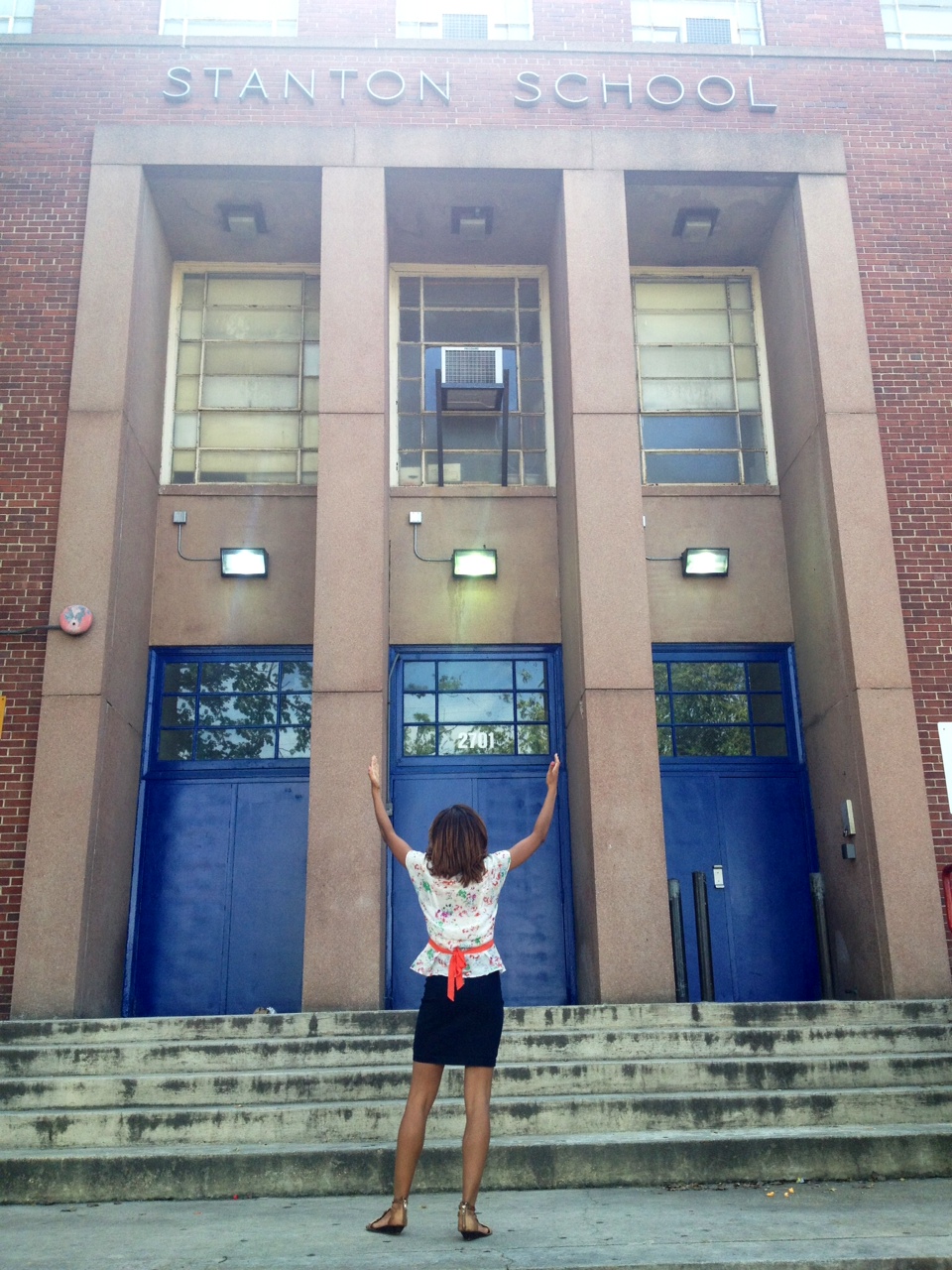
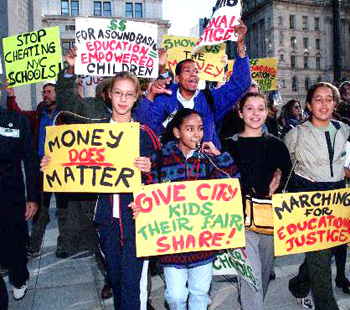
Some aspects of public education are in a battle: standardized testing, teacher evaluation, school choice, common core, class size, and more. Every solution is up for a great debate on Twitter, in the editorial section of newspapers, and blogs from Washington, D.C. to Los Angeles, C.A. and everywhere in between. Yet, as these battles take place, I’m worried that the best solutions are not making it to the table. Both sides are publicly seen as arrogant and unwilling to compromise, and this is hurting our kids.

The latest debate at the forefront is “no excuses” as a method to change school culture. Opponents of this school culture model claim that the no excuses approach ignores poverty’s stranglehold on schools. Supporters of this model argue that students need to be taught to stop making excuses for their level of academic achievement by working hard, being nice and going to college. Somewhere in the middle is where the answer lies. Yet, again the public conversation is creating another polarizing argument that halts progress.

Here’s my take:
Opponents of No Excuses: Yes, poverty is the root cause of the problems ailing our nation’s most struggling schools and communities. Yes, districts must provide schools with the basic wraparound services to provide an excellent education for our children. Nevertheless, I’m afraid what’s missing from your public stance is the acknowledgement that school culture must change in many of our schools.

No excuses is not an approach to combat poverty. It is an attempt to create a positive school culture. If you do not agree with this approach to creating a positive school culture, you must then give solutions about how to create one. By simply saying, “No excuses ignores poverty,” you lose a great opportunity to push the school culture debate further.

We can push the school culture debate further by discussing the following:
1. What is the vision of your school?
2. Does your current school culture support your vision of creating a college-going culture?
3. If not, how do we create a college culture in our schools that are not graduating students who go on to college in high numbers?
4. What mindsets do children need to succeed?
5. What does this look like on a whole- school level? Classroom level?
6. As a staff, what will we do to drastically improve our school culture so that are students expect to go to college?
7. What is holding your school back from creating a positive learning environment? Does your school have a whole-school behavior and incentive system? How are you improving attendance? How are you decreasing suspensions?
8. If your school does have an amazing school culture, share it, tweet it, blog about it. What are you doing to share your school’s best practices?

Supporters of No Excuses
Yes, schools must take daring moves to create learning environments that raise expectations and push students to believe college is their route to success in places where going to college is not the norm. Yes, school districts and school leaders have the power to create schools as safe havens that equip our students with the tools they need to beat the odds in their dilapidated neighborhoods. Yes, many schools do a poor job of creating positive learning environments for children.

Nevertheless, what’s missing in your argument is the reality that it’s not just college banners donning the hallways, college chants echoing from classrooms, or demerit systems that create school culture. Wraparound services, low student to teacher ratios, positive working environments that provide teacher leadership and professional development are also important pieces that work in synchronization to provide our students with the best conditions to achieve at high levels.

We need to push the school culture debate further by answering the following:
1. What is your definition of the “no excuses” approach?
2. How did you come up with this approach as the most effective way to change a school’s culture?
3. What does this model look like at the school level? Classroom level?
4. What are the misconceptions of this approach?
5. What are the areas of improvement for the “no excuse” model?
6. How do you create buy-in of this model from staff, students and families?
7. What happens when children challenge this model?
8. What are your student attendance and suspension rates? Have you seen increased attendance and deceased suspensions with this model? If not, what are you doing to improve? If so, what best practices can you share?

Let’s all agree to take this debate to the next level. The real work is the action happening in classrooms and schools. We all agree that for far too long we’ve allowed the children living in our nation’s most impoverished neighborhoods to attend schools that have not produced enough students attending college. Although, poverty continues to plague our neighborhoods, and we may not be able to control all the outside factors, we can definitely control what our schools look and feel like once a child enters the doors. Let’s discuss concrete solutions that schools can implement in their classrooms to create a school culture where students expect to attend college. Then put them into action. I’m ready to work!
The Best Chicago Strike Op-Ed!

20120915-004539.jpg

Tonight, as I sifted through tweets checking for articles on the Chicago Teachers Union, I found a gem. In my opinion, the best Chicago Teachers Union Strike op-Ed by far. Posted in The New York Times, the author Alex Kotlowitz asked a serious question, “Are We Asking Too Much of Teachers?” This is a question I asked myself earlier this year as I made the difficult choice to leave the classroom.

Fueled by my passion to create better schools for all public school students, I started teaching giving it 100%, even when that meant putting my life on hold as I struggled to manage the individual life circumstances of each of my students. You see, I never intended to be a career teacher. Being a teacher was just my first step in a lifelong journey to help bring innovative solutions to the most ailing problems facing our nation’s most poverty-stricken communities. I hope to one day be at the table where major decisions are made to benefit our
students. I believe that teacher voice is critical at that table.

Moreover, as my teaching days went on and years passed, writing objective-driven lesson plans aligned to standards every day wasn’t all that would deem me effective under DC Public School’s IMPACT evaluation system. I had to create Girls and Boys Day to introduce my scholars to positive mentors that look like them and had gone to college. I did home visits to build relationships with parents. I brought volunteers into the school to help get it ready for the first day of school. I wrote Donors Choose grants to get more resources into my classroom. I did everything in my human power to try to circumvent poverty’s impact on my classroom.

Nevertheless, late nights and early mornings entering student data in a computer taught me (the hard way) what I knew all along from growing up in an poverty-stricken city in southern NJ–just being an effective teacher alone cannot solve poverty, and I could not stress myself out about it. Because stressing myself out about my some of my students living in homeless shelters, not having food on the table or proper clothes to wear will break a person down–especially a teacher who comes to school every day garnering all hope possible to challenge this reality head on.

Now do not get me wrong. I agree that teachers must teach the best they can while knowing that we’re working against negative neighborhood environments that can suck our children into a tornado of negative choices that limit their life’s positive outcomes. I know that great teachers in every classroom will ensure that a student can be strong enough to believe in their future more than the dark reality that they live. I know that great teachers make a difference, but what Mr. Kotlowitz sheds light on is that teachers alone cannot rid our country of poverty. Putting so much pressure on schools does not serve our children or communities. Schools must also be supported by economic policies at the local, state and federal levels that create more sustainable and socioeconomically diverse neighborhoods that produce more equitable schools.

While so many people have the luxury of never stepping foot in an impoverished community, teachers in our most troubled schools don’t. It’s easy to be on Capital Hill and never come to Southeast DC, but make sweeping generalizations about all the teachers who work in the “failing” schools. It’s easy to work in Chicago Public Schools’ Central Office and never fully empathize with a student who asks you every day to see his incarcerated father, but you have to tell him it’s okay and help him stay focused on the lesson. When we dare teachers to be on the frontlines, having the audacity to fight poverty in they see and feel, we better have their backs every step along the way.

More than likely, Chicago won’t be the answer to Mr. Kotlowitz’s question–just like schools alone cannot heal our nation from wound of poverty. However, when we bring thoughtful dialogue and perspective in the conversation, we allow a better product to be produced. Here’s to a quick end to the strike, but to continued conversation. Thank you for Chicago for sparking the dialogue. We can either use this as a time to point fingers or to really begin to ask the tough questions that help us create systemic solutions.

Mr. Kotlowitz, I applaud you for bringing depth to the conversation. To read his piece that inspired my post click here

States Creating Separate and Unequal Standards for Students

20120827-142013.jpg

Over the weekend, I read a troubling piece in The Washington Post written by Andrew Rotherham. It described how Virginia has separate expectations for its students based off race, income and class. Instead of improving educational opportunities for all children, it seems as though Virginia is taking the easy way out to not face penalties from the No Child Left Behind Act.

While I understand what Virginia is attempting to do: give schools that are historically under-performing more attainable benchmarks, I disagree with the implementation. Virginia’s policy makes it seem that since under-performing schools are overwhelmingly occupied with students who are poor, black or Latino, as a result the expectations for those students should be lower. However, not all black and Latino students attend under-performing schools, and many capable students are not reaching their full potential–not because of their race, but because they attend schools in neglected communities.

I think what Virginia failed to do was detail its long-term vision. I surely hope the plan isn’t to always have unequal levels of student achievement. Yet, wasn’t that what No Child Left Behind created: an unrealistic goal to have all students performing at a certain level by 2014? It seems to me that this new policy still doesn’t get to the root of the problem.

Moreover, I agree that in the short-term different schools should have different benchmarks in order to bring the lowest performing schools up to par. Yet, these benchmarks should be checkpoints that lead to the ultimate goals each state has for all children. The ultimate goal should be to move that school out of the “failing” category. As a teacher who willingly worked in a historically “failing” school, progressive benchmarks are necessary in order to realistically progress towards high levels achievement. What No Child Left Behind did was penalize schools for not making Average Yearly Progress when it is these schools that need the most support and strategic investments.  Schools do not move from under-performing to high-performing in one, two or even three years. Progressive yearly benchmarks must reflect that reality.  Yet, we do not need to create race-based standards that set unequal expectations for our children.

The larger picture is that in our country we have stark inequality that greatly impacts minority groups–primarily because minorities are disproportionately living in poverty. Schools are trying to overcome poverty alone. The truth is the school must focus on its locus of control while local and federal governments must work to decrease poverty in our country.

Everyone needs to admit the following: Our nations worst schools are in impoverished neighborhoods. There are wealthy neighborhoods that do educate our students in public schools well. Schools should focus on creating better learning environments for students, but not burn themselves out trying to solve poverty. Pressure your local, state and federal government to improve our communities and neighborhoods. Doing both will simultaneously improve our country and our nation’s under-performing schools in the long term, but ignoring one or the other leads to great failure.

Below is an excerpt of Rotherham’s op-ed:

For years, Virginia tried to sidestep various provisions of the federal No Child Left Behind education law. No Child’s accountability requirements are awkward because they threaten to shine a bright light on the highly uneven performance of Virginia’s schools and the state’s significant achievement gaps. So when Education Secretary Arne Duncan allowed states to set new performance targets earlier this year, Virginia, along with many other states, jumped at the chance. Unfortunately, rather than taking the opportunity to focus more on underserved students, the state took the stunning step of adopting dramatically different school performance targets based on race, ethnicity and income.

President George W. Bush famously talked of “the soft bigotry of low expectations” in education, meaning the subtle ways educators and policymakers shortchange some students by expecting less of them. Virginia’s new policy is anything but subtle. For example, under the new rules, schools are expected to have 78 percent of white students and 89 percent of Asian students passing Virginia’s Standards of Learning math tests but just 57 percent of black students, 65 percent of Hispanic students and 59 percent of low-income students. The goals for special-education students are even lower, at 49 percent. Worse, those targets are for 2017. The intermediate targets are even less ambitious — 36 percent for special-education students this year, for instance. Goals for reading will be set later.

Read more here

I would love to read your thoughts. Feel free to comment!

The Myth of the Super Teacher & Learning from Failure

Recently, I had a chance to view a presentation by Roxanna Elden, an amazing high school writing teacher.  In this video, she describes the myth of the super teacher.  This video helped me begin to reflect on my four years as a teacher.  I must admit, like Ms. Elden, I wanted to be a super teacher.  I came in with the expectation that if I simply had great objective-driven lesson plans and a detailed classroom culture and investment plan, that everything would magically fall into place and my students would all leave my class as geniuses.  It was not until I took that pressure off that I began to hit my own teaching stride and rhythm.

Check out Roxanna’s video, followed by my reflection below:

<p><a href=”http://vimeo.com/43565010″>The Myth of the Super Teacher</a> from <a href=”http://vimeo.com/user9302257″>EdWriters</a&gt; on <a href=”http://vimeo.com”>Vimeo</a&gt;.</p>

The reality is there are great teachers.  Teachers who are amazing at their craft, but this takes years to develop, especially if you choose to teach at a high-need school with little curricular resources and materials, tailored professional development and on-going support.  Nevertheless, when the challenges and hardships that come with teaching are not shared, this creates an unrealistic expectation in the minds of first year teachers.   This unrealistic super teacher myth puts stress and pressure on teachers who truly do want to make a difference, try to do everything right, but cannot account for when things do not go as planned.  And, as any first-year teacher knows many, many things do not go as planned.

To any teacher just beginning your teaching journey, I do not want to sugarcoat my teaching experience as one that was always joyful because it was learning how to overcome the challenges that helped me become a good teacher.  My colleagues and I spent late nights and weekends at school.   In fact, my 2012 New Year’s Resolution was to not go into school on the weekend; and I succeeded, even though I continued to stay late during the week.  In the video, Roxanna forgets to mention that those teachers who do stay up late planning and only get a few hours of sleep do so because they lack resources or the proper training and support to get it right the first time around.  Every school schedule is different.  Some schools allow teachers much planning time throughout the day so little has to be done after school.  Some schools do not give teachers much planning time throughout the day, or use this time for meetings.  To outsiders, my late nights were a choice, to my coworkers we knew that time was not on our side when it came to meeting the demands of being a teacher serving in a high-need school–especially a turnaround school–requires a ton of resources, that teachers have to supply and/or create.

However, in some ways, teachers are super for being able to juggle so much at once–even if they sometimes fail.  Although, I was a teacher, to my students I was better known as known as an alluring actress of the famed characters in the novels that I read, counselor, disciplinarian, role model, and trusted confidant who was a phone call away no matter what the time.  I was also aiming to be an objective-driven guru, differentiation master, data manager, parent home visit scheduler, and push my life to the side and live for my students even on days that I wanted to cry because my lesson did not go as planned kind of teacher.

With little time to plan or even sit down during the day, even Arne Duncan’s Chief of Staff was surprised as she shadowed me this year during my morning block.  She was amazed at just how many little fires a teacher has to put out during a lesson, and she jumped right in to assist.  She was referring to one student who had been fighting a severe toothache and had not been the dentist, another who was struggling with his father’s incarceration and kept asking to speak to the school social worker, and countless other one-to-one interactions with my kids that happened throughout the two hour and forty-five minute block.

So yes, becoming an effective teacher does not happen overnight.  The myth of Roxanna’s “super teacher” who comes in the classroom with little experience, no support and little sleep and flips his/her classroom upside down in his/her first and crushes the achievement gap is not a realistic expectation to set when training teachers.  Yet, the super teacher who juggles multiple hats, learns how to persevere through challenges, learns one’s craft overtime and is part of an amazing school culture committed to student achievement is realistic.  See what many people do not realize is that being a teacher is more than just writing objectives on a board, and delivering lesson plans and aligning tests to standards.  It is about growth, being able to bounce back from disappointment and constantly motivating your students as you are going through the learning process as well.

To all the first year teachers out there, do not stress yourself out if your lesson goes haywire when one student threw a tantrum because he/she was hungry.  Do not get your panties in a bunch if what you thought was an amazing lesson because you spent all night creating it is thrown out the window because your students just did not master it.  Like Ms. Elden said, you can be a super teacher, it may not be every day.  The best teachers know that the most successful people are those who have risen after failing, reflected and tried again.

Should I say or Should I go? Making the Choice to Leave the Classroom

A few weeks ago, it hit me.  I was really leaving the classroom.  On the last day of school, I began to share this news with other people outside of my school.  My principal is fully supportive and she had known for a few months.  Many people began to ask me why I chose to leave the classroom and whether I decided to leave education, altogether.

TeachPlus asked me to write a piece for their series on teachers who decided to leave the classroom this year.  I feel honored to be able to share my story.  Below is an excerpt:

Unlike most of my friends in my hometown of Bridgeton, NJ, I began life with the scale tilting in my favor. My father was a first generation college graduate who worked hard to ensure that I would not have to struggle like his family did. His life experiences led him to ask me a serious question in my final year of middle school: “Do you want to attend private school next year?” Faced with the decision about public versus private secondary education, I knew what was at stake: get a top-notch high school education that would ultimately lock in my acceptance to a premier college or university, or gamble my future success by attending my sole local high school — ranked the lowest in the county, with a college matriculation rate of about 10 percent.

On that day, I firmly told my dad that I would graduate from the public Bridgeton High School. He didn’t know it at the time, but with that one question, my father lit a fire inside of me that continues to burn for high quality public education for all children.

I left New Jersey with three suitcases and a dream. After college, I started my teaching career in New Orleans, and then relocated to Washington, D.C., where I taught third grade in a district turnaround school. But after four years, I’m stepping out of the classroom. It’s a tough choice, but the reality is that I believe I can make the biggest impact on public education from outside the walls of my school.

Check out the rest of my reflection here.

Join First Book-DC as We Celebrate Literacy!

This time last year there was no First Book-DC.  However, because of a committed group of people First Book-DC launched and has since had our first grant cycle.  Join us tomorrow as we honor the organizations that received book grants and all of you who supported us along the way! 

Image

First Book-DC cordially invites you to our

Grant Recipient Celebration 

on Tuesday, April 17th, 2012

Tabaq Bistro 

1336 U Street

6:30-8:30pm 

Join us as we celebrate 11 non-profits and schools that were awarded First Book-DC book grants this spring! 


RSVP: www.firstbookdccelebration.eventbrite.com

The celebration will honor the organizations that applied to help the most deserving children recieve the gift of reading 

as well as our numerous supporters who helped to make it happen.


Enjoy happy hour specials at Tabaq Bistro! 

We hope you can join us!  

Yours in the Literacy Movement,


First Book-DC Advisory Board

Get connected:  Twitter @FirstBookDC   

Facebook:  www.facebook.com/firstbookdc  

Progress of the Administration’s Promise Neighborhoods Initiative

Five organizations received money from the government to create Promise Neighborhoods.

The winners, announced by the U.S. Department of Education today, are:

—Westminister Foundation. of Buffalo, N.Y.; which got $1.49 million

— Berea College in Berea, Kentucky which will work with Clay, Jackson, and Owsley counties in that state; which got nearly $6 million

—United Way of San Antonio and Bexar County in San Antonio, Texas, which got $4.3 million

—California State University – East Bay in Hayward, Calif., which got nearly $4 million

— Northside Academy, in Minneapolis. which got $5.6 million

According to the Department of Education’s press release today, Domestic Policy Advisor to President Obama Melody Barnes stated, “I commend all communities that are putting education at the center of efforts to fight poverty in urban and rural areas. The goal of Promise Neighborhoods is to provide the resources and support young people need to succeed while transforming distressed neighborhoods into communities of opportunity.”

I’m eagerly following the president’s Promise Neighborhood initiative.  This is exactly the type of work I want to do.  Read more here.

Update on Seat Pleasant Students Part 2

As the years quickly past, reality sets in for many of the dreamers.  Is the promise of a full-ride to college enough to outweigh environmental factors?  Check out this excerpt from part 2:

Being a Dreamer was supposed to give Darone a different future from the guys he saw loitering on the streets of Capitol Heights. But staying focused enough to take advantage of the opportunity was challenging. At Northwestern High School, there were temptations everywhere. In the cafeteria, one of Darone’s Seat Pleasant classmates, Jeffery Norris, hosted poker games. At certain times in the hallway, there was a mini-casino, where Darone and another Dreamer buddy, the raucous prankster William Smith, played cards. There were girls, more of them than Darone had ever seen under one roof. Who wanted to sit in class when there was much more fun outside the door?

More than halfway through his freshman year, Darone was failing English and biology. He talked back to his teachers. He skipped classes and then erased the automated phone messages the school left reporting his absences before his mother could hear them.

His mother was summoned to a meeting, where Proctor warned Darone that he could lose his scholarship money.

“Shape up, or you’re not going to make it,” Darone remembers being told.

While reading today’s piece, I could not help drawing similarities from the realities that these students faced and the life experiences of my peers in small-town Bridgeton, N.J.  Where you live is not supposed to dictate your future.  Ideally, education is supposed to be “the great equalizer.”  However, can education alone put children on the path to college and halt the cycle of poverty for families?  Is a school a force that can be stronger than peer and neighborhood influences.  I think it can, if we choose to simultaneously build stronger communities and decrease the level of economic inequality in the United States.

Continue reading over at the Washington Post.


Where Are They Now? Update on Seat Pleasant Students

The Washington Post released part 1 of a 3 part series on the life updates of fifth grade students who attended Seat Pleasant Elementary School in 1988.  These fifth graders were given the deal of a lifetime:  Each student who graduated high school would receive a full ride to college.

Seat Pleasant by the Numbers:

  • 60 total students
  • 44 graduated from high school
  • 5 got a GED
  • 13 attended trade school
  • 12 graduated from trade school
  • 35 attended college
  • 11 graduated college

Watch the video that highlights where many are now here:


Report shows low-income schools funded less

When I walk towards my dilapidated school, I see a condemned building sharing our parking lot.  Once inside, I notice the old, rusty windows that let rain seep through during storms covered in white cages that make the school look more like a prison.  As I walk towards my room, I notice that many rooms lack basic technological needs.  Many do not even have technology at all.  We have three SMART boards in the entire building.  One teacher was told that she would have to share the board with the other teacher in her grade.  Well, she opted to not have technology since it is difficult to move kids throughout the learning block in between two classrooms just to use that advanced piece of technology.

Moreover, once inside my room, I notice that curricular and planning materials are sparse so I spend countless hours creating everything:  worksheets, copies of texts, and the list goes on.  I think the number one enemy to the environment may very well be a school.  So while money may not be everything, as a teacher in a turnaround school in the poorest section of Washington, D.C. each day I’m confronted with what high expectations coupled with little funding can produce.  If it was not for outside efforts to help with costs, many improvements to our school building, additions to staff, and even our new family engagement initiative would not be possible.

I am the first to admit that simply throwing money at a problem does not make it go away.  However, that does not mean that money is not a necessity.  If this were the case, schools would not be trying to create foundations or apply for grants to supplement the costs.  Teachers would not have to use sites like Donors Choose for school supplies.  One thing that makes the charter school movement so successful is its ability to raise private funds.  Money is vital to the education reform movement.

Moreover, funds used properly will support schools in fully funding programs that work, ideas worth exploring, buildings up to code, and staff to meet student needs, among other things.   However, The Washington Times recently reported the findings released by the U.S. Department of Education that prove that money is not being adequately distributed across schools–specifically wealthy and low-income schools.  Below is an excerpt from the piece:

Loopholes in federal education law have allowed districts to funnel more state and local money to wealthy schools at the expense of their low-income counterparts, according to a new report released Wednesday by the Education Department.

More than 40 percent of low-income schools don’t get their “fair share,” the report says, despite federal requirements that districts spend “comparable” amounts of money at poorer schools eligible for Title 1 funding.

“Children who need more are getting less,” Education Secretary Arne Duncan told reporters Wednesday.

You can read more here.  I hope the Federal government works urgently to correct the law.  The framework that schools and districts must work within leads the degree in which education can serve as “the great equalizer.”   What are your thoughts?