Last month, my school entered Glee’s Give a Note Contest. Glee is offering up to $1 million dollars in prizes to 73 schools!! You heard me correctly!! Glee is giving up to $1 million dollars in prizes to 73 schools. The money will go towards music programs. My school needs your daily support! Vote by clicking this link here. Share the video with your friends and family. Thanks for your support.
Category: Uncategorized
No computer left behind? Ensuring school resources for all!
I remember my senior year of high school vividly. I toured many colleges and universities. One thing that each of these universities touted was its technology and libraries. All of the universities I toured were public schools, yet each could proudly state how many computer labs and libraries were on campus. Since each wanted to be known as a premier learning institution, they knew that having top-of-the-line computer labs and millions of books were necessary to ensuring that reputation. Can we also say this about public elementary, middle, and high schools? Are we creating premier learning institutions that help our children to become critical thinkers and innovators by providing them with these basic tools?
As I am creating my non-fiction writing unit, I am forced to come face-to-face with the reality that my school is lacking the basic resources that should be available to all schools in this technologically advanced age. In the non-fiction writing unit, my scholars will write reports on animals. In November, they go on a trip to the National Zoo, so it makes sense for them to connect their in-classroom learning to outside experiences. Nevertheless, what concerns me is the fact that my school does not have a computer lab or working library. Can you imagine teaching students how to conduct research without the two most important places to find sources? My story is not an exception. In fact, many teachers across America face this same problem.
As a child, I loved taking both computer and library class. In high school, I would race my friend as we learned how to type. We did not realize it as the time, but we were both fostering a love of computers while simultaneously increasing our typing skills. In elementary school, my school’s librarian engaged us in the most fascinating lessons before sending us off to choose and checkout books on our own. We did not know it then, but we were learning how to enjoy reading and personal responsibility at the same time. Just how are we creating learning environments where children are intrinsically motivated to learn if they are learning in schools without the basic resources to engage them?
It is an injustice that many schools in communities that need quality educational opportunities have to send their children to schools with the least resources. Now do not get me wrong. I am not bashing the teachers or administrators at my school. Teachers in these schools work tirelessly to create engaging lessons and learning opportunities that spark a student to want to learn in spite of a lack of resources. Many of us event spend our own money to fill the void. How can we expect all schools to meet the same standardized test score bars when we all there to be “have” and “have not” schools? More importantly, when will school districts ensure that all schools equip teachers with the basic resources necessary to teach students so that they may achieve at high levels?
Fall into Reading with First Book-DC!
As a teacher, I know how schools in low-income communities lack resources. As a literacy teacher, I know how important it is to have a wealth of books available build a love of reading in each student. When I was a teacher in New Orleans, I served on the board of First Book-NOLA. I helped give out thousands of books to children across the New Orleans metropolitan area. Nevertheless, when I moved to DC, I learned that their First Book Advisory Board was inactive. This broke my heart and I decided to do something about it. I contacted First Book National and soon was asked to co-chair the effort to bring First Book-DC back!
Here are three simple things you can do to help First-Book DC:
1) Make a donation to our Fall Into Reading fundraising campaign by visiting www.firstbook.org/dc. Our Advisory Board raises funds for the purchase of books for kids in the Washington, DC area. Currently, we are working to raise $2,000 – enough money to provide 1,000 new books to kids in Washington, DC. Our goal is to raise this money by October 31. It is my hope that we will reach and even exceed our goal with your support. Every $2.00 donated provides a book to a child in need. So, a donation of just $10 will purchase 5 new books. A donation of $50 will provide 25 books – enough for an entire class of DC students.
2) Like First Book-DC on Facebook. We’ll be posting updates about the progress of our fundraising campaign on our Facebook page: http://www.facebook.com/FirstBookDC. Be sure to “like” us on Facebook so you can stay up-to-date about our upcoming activities, events and fundraisers.
3) Help us spread the word about First Book-DC. Do you know of a program, teacher, school or other organization in Washington, DC that could benefit from a First Book grant for new books? Help them connect with us by directing them to our website at www.firstbook.org/dc.
For more information about First Book, visit www.firstbook.org.
Thank you for your support.
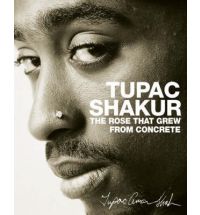
Systemic Change: The Rose that Grew from Concrete
Earlier this year I introduced big goals to my scholars by reading them Tupac Shakur’s poem, The Rose that Grew from Concrete.
Did you hear about the rose that grew
from a crack in the concrete?
Proving nature’s law is wrong it
learned to walk with out having feet.
Funny it seems, but by keeping it’s dreams,
it learned to breathe fresh air.
Long live the rose that grew from concrete
when no one else ever cared.
I showed them pictures of Tupac and told them about his life. I explained to them the achievement gap. They were inspired. They understood the comparisons of concrete and their neighborhoods. More importantly, they became invested in working to be roses growing from their concrete environments.
Thanks to Twitter, I always come across great articles and videos pertaining to education reform. Recently, I watched a video of Dr. Jeff Duncan-Andrade, an Associate Professor of Raza Studies and Education Administration and Interdisciplinary Studies at San Francisco State University. It was a TED lecture entitled Growing Roses from Concrete. Immediately after reading the title, I felt compelled to check it out. Little did I know that upon clicking that link, I was in for the most powerful lecture I’ve heard in a long time. Dr. Duncan-Andrade’s educational theory aligns exactly with what I envision needs to be done to systemically change our nation’s school.
Here is a small portion of the thirteen minute lecture:
[Tu]Pac says when you see a rose growing from concrete, you don’t question its damaged petals. Of course it has damaged petals. It’s growing in the concrete. Instead you celebrate its tenacity and its will to reach the sun. I think Pac is right to acknowledge that the concrete is real. And there are young people attempting to grow from concrete. And it is important to know that when we are attempting to grow roses from the concrete that we actually understand it better…The concrete is not natural. The conditions in which urban youth are growing are not natural, they are created, which means that they can be changed.”
I encourage you to check out the rest of the Dr. Duncan-Andrade’s lecture here. It will give you much insight into the road less traveled in education reform: acknowledging that children and families growing up in low-income neighborhoods do not have to live under these conditions. These conditions are man-made and when we address the living environments of families in low-income and under-resourced communities, we also create a solid foundation to systemically reform our schools for the better.
13 minute TED Lecture: http://www.youtube.com/watch?v=2CwS60ykM8s
Full 2-hour lecture given at Harvard University:
Twitter’s Role in the Education Debate
Twitter is a powerful tool to connect people with many interests. As a public school advocate, I’m eager to hop on Twitter each night and catch up on the latest education news. More importantly, I’m eager to read what the latest power players in education reform are saying. On Friday night, I had the opportunity to dialogue with who education power players: Diane Ravitch and Dr. Steve Perry. Both are people that I admire, and one day I hope to chat with them face-to-face. As a fourth year teacher, I am constantly seeking the wisdom from more seasoned people in the education arena. Both Ravitch and Perry share many of my views.
Below are our conversations:
I felt obligated to ask Diane Ravitch some questions after watching her debate with Geoffrey Canada on Education Nation. It rocked my core that two people, who agree on many things, were actually debating. Geoffrey Canada is the founder of the Harlem Children’s Zone–an innovative way to reform not only schools, but an entire community in Harlem, NY. Diane Ravitch, a former Secretary of Education, and now a historian and professor at New York University who advocates for teachers, whole child education, and eradicating poverty to improve our nation’s schools. It perplexed me that they were debating. Now don’t get me wrong, people can debate. However, the current status quo vs “reformer” arguments are divisive. Quite frankly, I don’t view Diane Ravitch as the status quo. I think she’s one of the most progressive thinkers of our time. I do believe Geoffrey Canada to be an innovative reformer because of his Harlem Children Zone approach. Nevertheless, I personally believe that the back and forth in education debates are halting progress. Therefore, I asked Diane Ravitch some questions on Twitter. To my luck, she replied.
Finally, he replied. 🙂
How I Developed my Ed Reform Theory Part 1
As mentioned in my previous post, Twitter’s Role in the Education Debate, The dialogue around education reform is becoming divisive. I am not a proponent of either side. I actually see a common ground. Nevertheless, what has been on my mind is the misconception that people who want to create better neighborhoods and communities for our nation’s low-income citizens, while simultaneously pushing for education reform, are being labeled as status quo. That label is extremely confusing for me. I hope that many of you can help me to understand why a belief that is perhaps the most progressive is labeled as status quo.
I decided to tackle this issue, by shedding light on how I developed my education reform theory. I hope that my story helps you to understand my point of view: Children growing up in low-income communities have the innate ability to achieve at high levels. However, often as statistics indicate, their community’s influence limits them to see what is possible. Many become products of their environments. Nevertheless, America has the capacity and knowledge to create better neighborhoods for its low-income citizens. Building more sustainable communities, coupled with reforming these schools, will systemically change our public school system for the better.
Growing up in small-town Bridgeton, N.J., (http://en.wikipedia.org/wiki/Bridgeton,_NJ) exposed to me an early age to the economic inequality in America. I had friends who lived in middle class homes, like me, and I had friends who lived in “the projects”. I knew early on that something was inherently wrong with that, but in my elementary years, I was too young to understand why. However, because my town was so small and school options were slim, everyone from middle class to low-income attended the same schools. Back then, my town had six elementary schools (now all K-8) which fed into one middle school and one high school. I gained an early awareness through certain life experiences (summer camps at Rowan University, computer courses as the local community college, constant interactions with college-educated people, etc) to a different way of life, partly because my dad went to college. He was able to open my eyes to what is possible for me to achieve beyond my small-town. This exposure was the reason I was able to overcome living in a small-town that had little resources. (According to Census results, the median income for a family in Bridgeton is $30,502). Fortunately, I grew up with a middle-income lifestyle. This was not the norm for many of my peers.
During my eighth grade year, my dad asked me if I wanted to attend private school. By that age, I had developed my own educational and economic theories, and I knew exactly why he asked me that question. Growing up my local high school did not have the best reputation—in fact; it was labeled as the worst high school in my county and one of the lowest performing in the state. This label haunted my classmates and me as we interacted with students at different schools. As a student-athlete, we would interact with other schools that made it known through their taunting and sly remarks that we were at the bottom of the barrel. In my county, people would say, “Oh, you’re from Bridgeton?” as if it meant that I was less of a person. Therefore, when my dad, asked me if I wanted to attend private school, I knew it was because he wanted what any parent wants for their children: the best education. Since he was fortunate to beat the odds and graduate from both college and graduate school, he wanted me to have every opportunity to succeed.
Yet, without hesitation, I firmly and confidently told him that I wanted to attend my local high school, and I knew what that decision meant, too. It meant that I may not receive the best education—yes, math still haunts me to this day. I even failed my first collegiate math course. However, what was most important to me was that I served as a voice to my peers to take charge of their futures despite where they grew up. I wanted them to prove people wrong; I wanted to prove people wrong. I wanted to prove to naysayers that people growing up in Bridgeton could achieve just like anyone else. Most people cannot escape their environment to attend a better school–but I chose to stay.
I do not know if I chose my life, or if my life chose me, but I committed my life to advocating on behalf of my peers who fell victim to their zip code. I decided early on that people should not have to live like that. That is why I view education reform and community reform as both necessary to systemically change our nation’s public school system.
Be on the lookout for Part 2 of How I Developed my Ed Reform Theory.
Strategies to Increase Parent-Teacher Communication
At the start of the school year, I sent home a parent contact sheet. On the sheet parents filled out their phone numbers. They were also asked to select which way they prefer to be contacted (i.e. phone call, text, email, letter). Many indicated that they preferred phone calls and text messages. In an effort to maintain contact with parents, I am rolling out two initiatives: bi-monthly phone calling schedule and weekly mass texts.
Since my school is departmentalized, I teach two third grade classes (total of 38 students). In an effort to split communication with both classes equally, I developed a phone calling schedule. One week, I call families from Catholic (my homeroom). The next week, I call families of my scholars in Georgetown. Each day, I call 4-5 scholars and update parents on their child’s progress. This schedule ensures that I am getting a chance to talk to all students on a consistent basis.
In addition to phone calls, many stated that they wanted to be contacted via text. Last night, I set up a text messaging group for both classes. Weekly, I will send out mass text messages to celebrate whole class successes and send out important reminders. Since I’m not sure of the families’ text messaging plans (I do not want to take up too many texts per month), I will keep the texts short and sweet. My first mass text is below:
Hi everyone! I just created a text group for third grade. Reminder: Back to School Night is tomorrow at 6:30pm. Also, remember to sign your child’s homework. Take care, Ms. Bunting
I look forward to texting parents this year in a way to increase positive communication.
Since educators are strapped with time, creating a parent communication plan is key to ensuring consistent communication with all scholars. I believe my phone calling schedule and weekly mass texts our two ways to help parents to feel engaged and connected.
Hip Hop in the Classroom
This past Sunday, one of my coworkers and I decided to lesson plan at Starbucks. While there, she shared with me a book, Hip Hop Speaks to Children: A Collection of Poetry with a Beat, by famed poet Nikki Giovanni. As I flipped through the pages, I became so inspired to use more hip hop, lyrics and poetry in my class this year. I was reminded just how much hip hop and poetry is a part of me, and how I can reach my students in a fun and engaging way.
Outside of my literacy block, I use inspirational music to start my day as students complete their Do Now. I have a track list that includes R Kelly’s The World’s Greatest, Whitney Houston’s The Greatest Love of All, Ashanti’s Dreams and many more. I use the music to set the tone for the day, while also unconsciously feeding my scholars to believe in themselves.
Additionally, the teachers join together to transform hip hop lyrics into college-themed chants and cheers. Last year, there was a battle between third, fourth, and fifth grades to change the lyrics of Wiz Khalifa’s Black and Yellow to inspire our scholars to get ready for the DC-CAS. I can still remember my scholars bouncing while rapping, “Gonna pass, DC-CAS, gonna pass, DC-CAS” to the beat.
Nevertheless, I was not using hip hop as much as I could during my actual literacy components. It was not because I did not think that hip hop as a part of literacy. After some reflection, it was that I was focusing much of my attention on novels, short stories and non-fiction books, opposed to musical lyrics. As a literacy teacher, I can use poetry and hip hop lyrics to teach read aloud and Reader’s and Writer’s Workshops mini-lessons. Below are just a few from the book that I selected:
- Tupac Shakur’s Rose that Grew from Concrete
- Benjamin Zephaniah’s For Words and Pencil Me In
- Antwone Fisher Who Will Cry?
- Mos Def’s Umi Says